
 日本語
日本語 log in
- Blog
- What Is a Traditional Japanese Wedding? A Matchmaker’s Guide
Japan
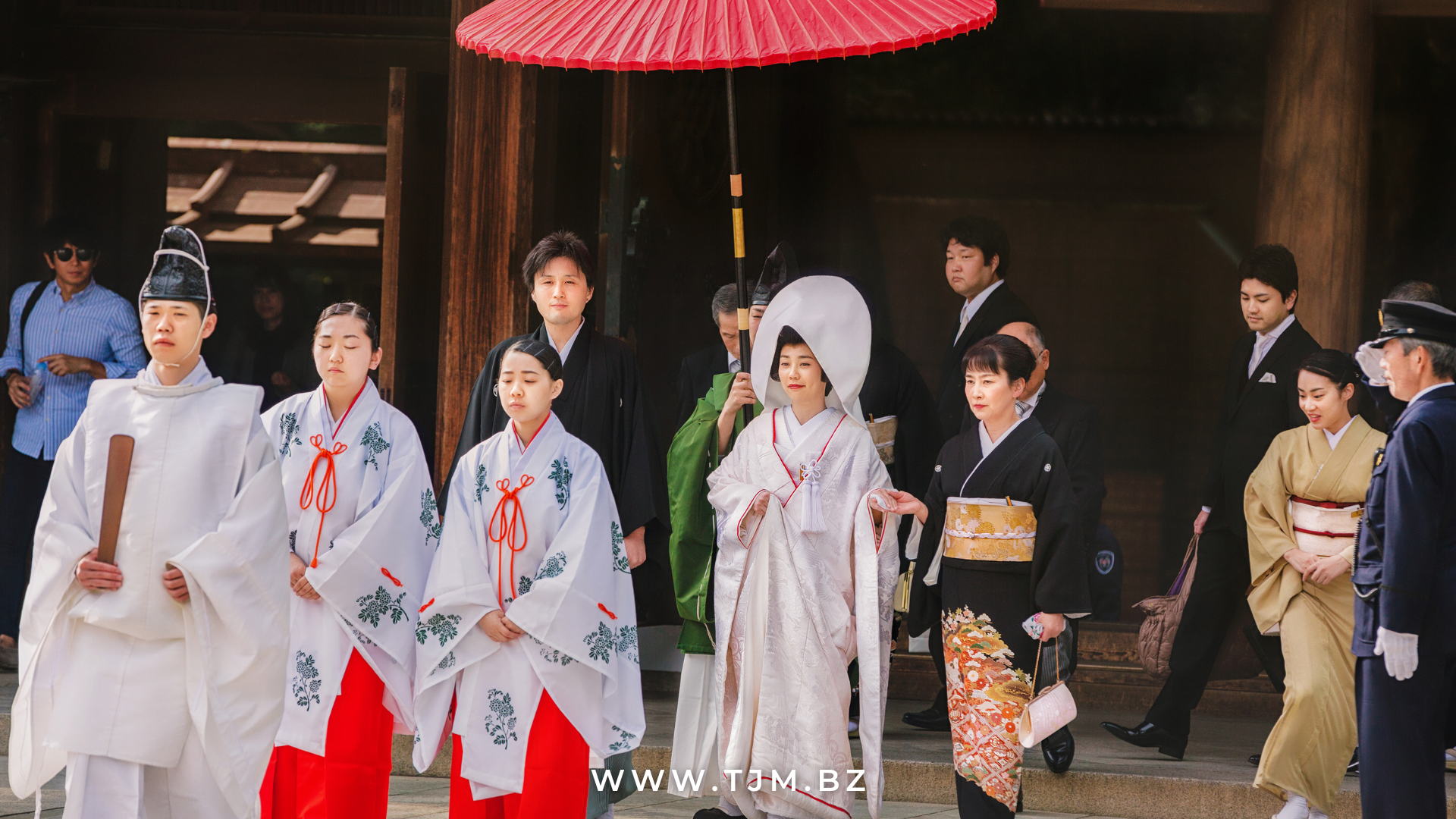
What Is a Traditional Japanese Wedding? A Matchmaker’s Guide
In 27 years of matchmaking, I’ve watched hundreds of men fall in love with a woman before they ever fully understood the culture she comes from. If you’re dating, or hoping to marry, a Japanese woman, there’s a good chance you’ll eventually stand at the edge of something quietly beautiful: a traditional Japanese wedding.
There’s a reason so many foreign men are drawn to it. A bride in a pure white kimono, standing in the hush of a Shinto shrine, exchanging vows that have barely changed in a hundred years — it’s a different kind of romance than most Western men grow up with. But the beauty isn’t only visual. Underneath it is a whole way of thinking about family, commitment, and what it means to build a life together.
Let me walk you through it.
Contents
- What Is a Traditional Japanese Wedding, Exactly?
- How Marriage and Family Used to Be Viewed in Japan
- Inside a Shinto Wedding Ceremony
- The Meaning Behind Shiromuku, Irouchikake, and Montsuki Hakama
- Traditional vs. Modern Japanese Weddings
- It Varies by Region and by Family
- What Still Remains Today
- Frequently Asked Questions
What Is a Traditional Japanese Wedding, Exactly?
A traditional Japanese wedding usually means a Shinto ceremony, called Shinzen-shiki (神前式), held at a shrine or shrine hall. Rather than vows spoken only to each other, the couple reports their marriage to the Shinto gods and pledges themselves as husband and wife in front of them. It’s quiet. It’s formal. And it carries a kind of weight you don’t always find in a Western wedding.
Historically, marriage in Japan wasn’t only about two people falling in love. It was about two families joining together. That’s part of why the ceremony has always been treated with so much care. It isn’t just a party. It’s a milestone the whole family shares.
How Marriage and Family Used to Be Viewed in Japan
In the past, Japanese marriage was often centered on the family more than on romance. Rather than two people choosing each other purely out of love, marriage was seen as a way to strengthen family ties, build a stable household, and carry the family name into the next generation.
This has changed a great deal, and it continues to change by region and by family. But that older way of thinking is exactly why the ceremony itself, the rituals, and even the clothing are so deliberate. Every part of it means something.
Inside a Shinto Wedding Ceremony
Every shrine does it a little differently, but a Shinto ceremony generally follows the same quiet rhythm.
The bride and groom, dressed in traditional kimono, enter together. A Shinto priest recites a formal prayer reporting the marriage to the gods. Then comes san-san-kudo, a ritual exchange of sake cups between the couple, three cups, three sips each, symbolizing their union. This is followed by an offering to the shrine and the reading of their marriage vows. The ceremony closes with the couple thanking their families and guests.
There’s no big spectacle. But if you’ve ever been in the room for one, you understand why it stays with people. Every small gesture is intentional, and that’s exactly what makes it so moving.
The Meaning Behind Shiromuku, Irouchikake, and Montsuki Hakama
If you’ve seen photos of Japanese weddings, you’ve probably noticed the kimono. They aren’t just beautiful. Each one carries its own meaning.
Shiromuku (白無垢) is the most formal bridal kimono, worn entirely in white. It represents purity and a new beginning, and it’s the choice for brides who want to honor the oldest traditions.
Irouchikake (色打掛) is the more colorful option, often in red and gold, richly embroidered with flowers or other auspicious motifs. Many brides wear this for the reception or for photos, since it makes such a striking impression.
Montsuki hakama (紋付袴) is the groom’s formal kimono, almost always in black, with the family crest displayed on the chest and sleeves. It’s understated next to the bride’s kimono, but that’s the point. It gives her the spotlight while still carrying real dignity.
None of these are just costumes. They’re a visual language. Once you understand what they’re saying, a Japanese wedding means something very different to watch.
Traditional vs. Modern Japanese Weddings
Weddings in Japan today look very different from a hundred years ago. Couples now choose freely between a Shinto ceremony, a Western-style chapel wedding, or a non-religious ceremony built entirely around their own beliefs.
The family-first mindset has also softened. Modern couples care more about their own feelings and values than about joining two households together. Even so, plenty of couples find a middle ground: a quiet, traditional Shinto ceremony, followed by a reception where the bride changes into a Western gown. It’s a way of honoring the old while still making the day their own.
I think that balance says a lot about Japan itself: deeply respectful of tradition, but never rigid about it.
It Varies by Region and by Family
One thing I always tell my members: there’s no single “correct” way to do a traditional Japanese wedding. Customs shift from region to region, and families differ in how closely they hold to the old ways. Some families still treat every ritual as essential. Others keep things simple and practical.
What matters most isn’t following every custom perfectly. It’s that the couple, and their families, feel the day was meaningful.
What Still Remains Today
Even as styles change, certain things haven’t. Many couples still choose kimono. Many still hold their ceremony at a shrine. And almost every couple still makes a point of thanking their parents, formally, as part of the day.
That’s the part that never really changes: the quiet gratitude toward family, and the seriousness with which Japanese couples treat this new chapter of their life. Styles come and go. That doesn’t.
Why This Matters If You’re Hoping to Marry a Japanese Woman
Here’s what I want you to take from all of this. When a Japanese woman thinks about marriage, she’s often thinking about more than a wedding day. She’s thinking about family, about respect, about the kind of steady, serious commitment that traditions like these were built to protect.
If you can understand that, really understand it, not just admire it from a distance, you’ll already stand out. In my experience, the men who do best in international marriage aren’t the ones who know the most Japanese words. They’re the ones who take the time to understand what actually matters to her, culturally and personally.
That’s exactly what I help with, every day.
Frequently Asked Questions
Do all Japanese weddings include a Shinto ceremony?
No. Many couples today choose a chapel-style or non-religious ceremony instead, or blend traditions freely.Can a foreign man have a traditional Japanese wedding?
Absolutely. Many of the couples I’ve matched have chosen a Shinto ceremony, kimono and all, even when the groom wasn’t raised in Japan.What should I know before meeting a Japanese woman who values tradition?
Start by genuinely learning about family, respect, and commitment in Japanese culture. It goes a long way, and it’s something I can help you with directly.
If learning about Japanese culture is drawing you closer to the idea of marrying a Japanese woman, I’d love to talk with you. Reach out anytime.
Naoko Matsumoto (まつもとなおこ)
FOUNDER & CEO
Traditional Japanese Matchmaker
 Traditional Japanese Matchmaker is the best dating and matchmaking service that is specialized for single international professionals and Japanese women established in 1999. Please click the link below to get started with TJM’s Free Registration if you are truly interested. We look forward to assisting you in finding your Japanese wife.





and more...
-

Blog
One Last Trip to Tokyo This Year: Speed Dating & a Field Trip, Nov 7-8 -
Blog
Inside TJM’s Tokyo Women’s Workshop: Why Japanese Women? -

Blog
A Weekend in Los Angeles: Real Connections, Real Matches -

Blog
Complimentary Matchmaking Consultations Are Back in NYC: August Visit Report -
Blog
NYC Aug 9: A Complimentary Step Toward Marriage -

Blog
7 Things to Know Before She Flies to See You: A Matchmaker’s Honest Advice for International Dating